The name Falconera was given to this mixed land-water environment when, before it was favored by humans, it was privileged by Falcons, particularly the Falcus Peregrinus. The first humans, therefore, became interested in it for the purpose of capturing the raptors, which were later tamed and sold to noble knights for hunting and fishing practices in the hinterland.
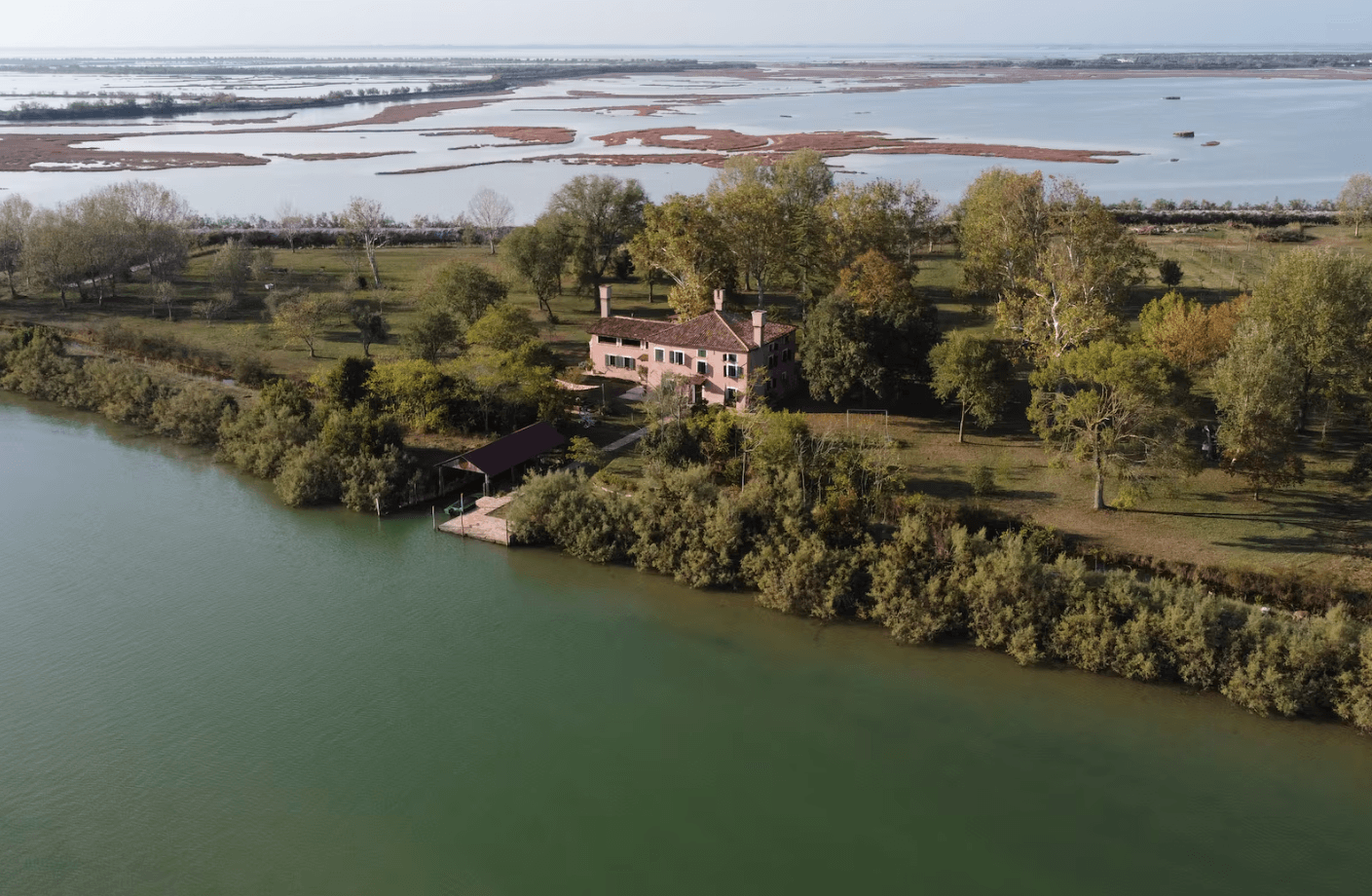
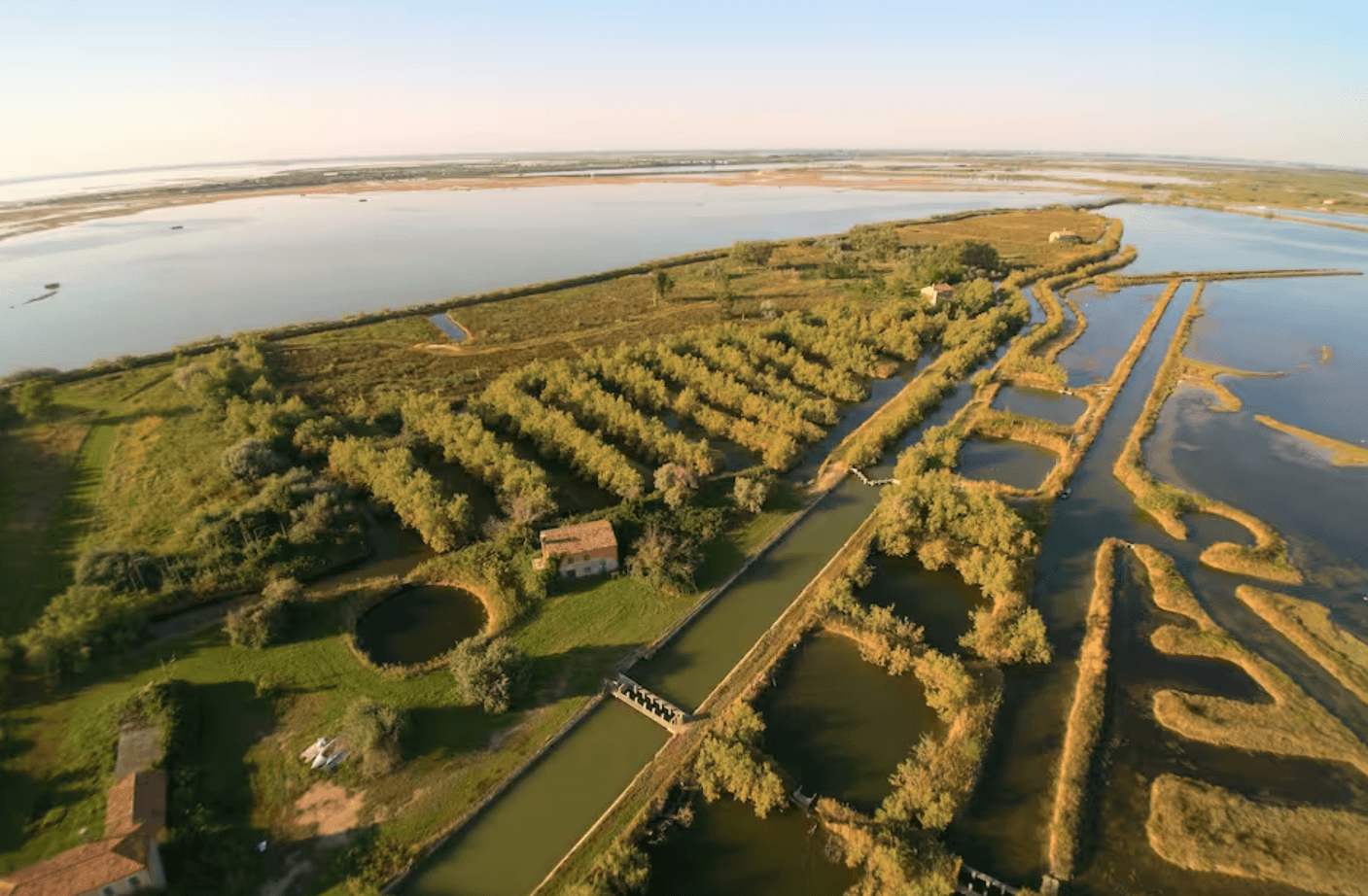
The morphological aspect of the island gives an idea of its constitution: there is water inside and outside, or rather, the valley has more water than land. For centuries, extensive aquaculture has been practiced here, a completely natural fish farming system that does not use feed, so the fish feeds and grows in its natural habitat. In addition, the vital spaces of the specimens are respected according to nature, without overloading the ecosystem. Man has the fundamental role of valley cultivator, and it is his task to orchestrate the keys and grids in a wise manner, ensuring maximum health and salubrity to the valley system.
Fish are introduced into the valley system in spring through natural breeding: the keys of the valley are opened to the sea, allowing all marine organisms to enter. Production can be increased by planting young specimens that are purchased and introduced by man into the system.
The fishing period is in “fraìma”: in the autumn, when the weather and climate conditions deteriorate, the fish feel the natural call of the sea and prepare for a sort of contra-migration - the so-called unloading - which leads them to channel en masse towards the mouth of the valley, ready to reach the sea waters that guarantee higher temperatures in the winter, as the water in the lagoon cools faster due to the shallow bottom.
To fish, nets with a variable mesh are pulled, depending on the size of the fish; the catch is made on selection, and only the largest fish will be sold. The smaller ones are placed in deep fish ponds to allow them to survive the colder temperatures of winter, to be then reintroduced into the valley system in the spring.
Extensive aquaculture is certainly a fundamental example of interaction between human activity and environmental conservation. The species that are typically raised in the valleys of the Venice lagoon are the gilt-head bream, the sea bass, the cephalopod and the eel, but depending on the seasons you can find mullets, cuttlefish, gray mullets, small tunas, soles, sand smelts and many other inhabitants, and not, of the salt lagoon.
Who knows what surprises the sea will bring us...
The Falconera island, like all the Lagoon Valleys, has its own unique biotope with specific characteristics that are difficult to replicate elsewhere, the result of an unstable and constantly evolving balance.
Approaching such a marginal reality, considering how small it is compared to the entire planet, allows us to easily and immediately focus on the perception of nature and in particular its fragility.
“Nothing is more fragile than the land near the sea, nothing is more fleeting than a place that speaks the clear language of nature.”
This is not a large English meadow. There are resident and passing animals, from the smallest fish to the largest raptor, passing through a myriad of insects. Even if some do not like them, they are evidence of a healthy environment and, therefore, sacred to man. There are also plants that change and travel creating different scenarios during the seasons.
The thousand colors of this garden make it a triumph of nature and there is nothing left but to be guardians of its immense beauty.
If you want to be informed and stay updated on the activities promoted during the different seasons,
Dire fare baciare is an ode to the potential that every human being carries within themselves, from childhood; to the infinite range of possibilities that each of us has in front of us when we are born. It is an invitation to discover the possibilities of doing, alone and together.
DIRE: < custoDIRE! >

DIRE: < custoDIRE! >
Green weeks and ongoing experiences during school holiday periods
🚢 Connection to/from the island 🚢
Children aged 5 to 11
Ongoing experience for multiple days per week
Immersed in nature, to understand the role of the farmer today as a guardian of nature. Each day, a theme related to the territory and agriculture will be chosen. This will be explored through recreational and educational activities, as well as through direct field experiences.
FARE: get involved!

FARE: get involved!
Seasonal sensory workshop
🚢 Connection to/from the island 🚢
Suitable for everyone
Duration: 4h
Depending on the season, a workshop will be proposed to more deeply understand the island’s seasonal agricultural activities and the traditional themes of the area. The goals are: to understand the role of seasonality in agriculture and the slow rhythm of nature.
BACIARE: man and the earth

BACIARE: man and the earth
Exploratory path
🚢 Connection to/from the island 🚢
Suitable for everyone
Duration: 2h
The journey to discover the island will be an opportunity for connection and reconnection with nature. It will explore the mutual relationship between humans and nature. Good agriculture—therefore the production of genuine and sustainable food—is based on a reciprocal exchange of care.
🎉
🎉
🎉
🎉
In this land, we aim to cultivate typical products of the Venice Lagoon with the intention of preserving, rediscovering, and spreading a cultural heritage made up of colors, flavors, and scents from ancient local traditions. Our products are fed by water and soil rich in shells and contain the unique flavor of the sea. Following the rhythm and seasons of nature, we adhere to the logic of nature.


The morphological aspect of the island gives an idea of its constitution: there is water inside and outside, or rather, the valley has more water than land. For centuries, extensive aquaculture has been practiced here, a completely natural fish farming system that does not use feed, so the fish feeds and grows in its natural habitat. In addition, the vital spaces of the specimens are respected according to nature, without overloading the ecosystem. Man has the fundamental role of valley cultivator, and it is his task to orchestrate the keys and grids in a wise manner, ensuring maximum health and salubrity to the valley system.
Fish are introduced into the valley system in spring through natural breeding: the keys of the valley are opened to the sea, allowing all marine organisms to enter. Production can be increased by planting young specimens that are purchased and introduced by man into the system.
The fishing period is in “fraìma”: in the autumn, when the weather and climate conditions deteriorate, the fish feel the natural call of the sea and prepare for a sort of contra-migration - the so-called unloading - which leads them to channel en masse towards the mouth of the valley, ready to reach the sea waters that guarantee higher temperatures in the winter, as the water in the lagoon cools faster due to the shallow bottom.
To fish, nets with a variable mesh are pulled, depending on the size of the fish; the catch is made on selection, and only the largest fish will be sold. The smaller ones are placed in deep fish ponds to allow them to survive the colder temperatures of winter, to be then reintroduced into the valley system in the spring.
Extensive aquaculture is certainly a fundamental example of interaction between human activity and environmental conservation. The species that are typically raised in the valleys of the Venice lagoon are the gilt-head bream, the sea bass, the cephalopod and the eel, but depending on the seasons you can find mullets, cuttlefish, gray mullets, small tunas, soles, sand smelts and many other inhabitants, and not, of the salt lagoon.
Who knows what surprises the sea will bring us...


Beekeeping, a practice that has been carried out on the island for 400 years, plays an essential role for the entire ecosystem. The health of the bees is a testimony to a natural habitat, not threatened by the common use of pesticides or acaricides in intensive monocultures.
Bees are important for the pollination of our flowers: they collect pollen as an excellent food supplement and skillfully work the nectar into honey.
The idea is that a bee hive is placed on a land and that the insects capture the weather, the vegetation, the topography, so many snapshots in time, summer or autumn wildflowers: all this is reflected in the honey. Our honey has a salty taste of Laguna due to the strong presence of Tamerice and Barena, where the predominant flowers are Limonium serotinum and Aster tripolium.
“And now ask yourselves in your heart: 'How will we distinguish what is good from what is evil in pleasure?' Go to the fields and your gardens, and you will see that the pleasure of the bee is to gather honey from the flower. But it is also the pleasure of the flower to grant the bee its honey. For a flower to the bee is the source of life. And a bee for the flower is a messenger of love. And for both, for the bee and for the flower, to give and receive pleasure is together ecstasy and need.” Kahlil Gibran


Agriculture is the soul of this Island, a territory that has always been part of the Orchards of Venice. From here, in the tradition of the Bozzato and Bardella families, the desire was born to cultivate local typical products, using sustainable techniques that respect the soil, its shape, and its inhabitants, our best allies.
The current orchard consists of many ancient and resilient cultivars, as they have survived numerous sea storms, the last one being in 2018.
We have introduced excellent collaborators: Californian earthworms for the production of humus with vegetable waste and manure from our horses and bees, excellent pollinators.
Off the field: depending on the seasons, you can find many wild herbs: mallows, yarrow, carrots, wild asparagus, saltwort, sponges, mushrooms, wild berries, and a thousand other varieties of flowers and plants. Because, contrary to what is said, the lawn is constantly moving.


La Venetian Lagoon and its islands have been recognized since 1987 as a UNESCO World Heritage Site within the listing “Venice and its Lagoon.” Its inclusion is due to the unique lagoon environment, which includes salt marshes, canals, and a natural landscape of extraordinary beauty, where nature, history, and human life coexist, exchanging mutual care.
“To build a hut of stones, branches, leaves—a heart of words here,
far from the world, at the center of things, at the deepest point.”
Our facilities for an immersive stay in the magic of the Venetian Lagoon: